The ground changes everything
Before a stone is chosen, a place is understood. The ground sets tone, scale and atmosphere before anything else is brought to the site.

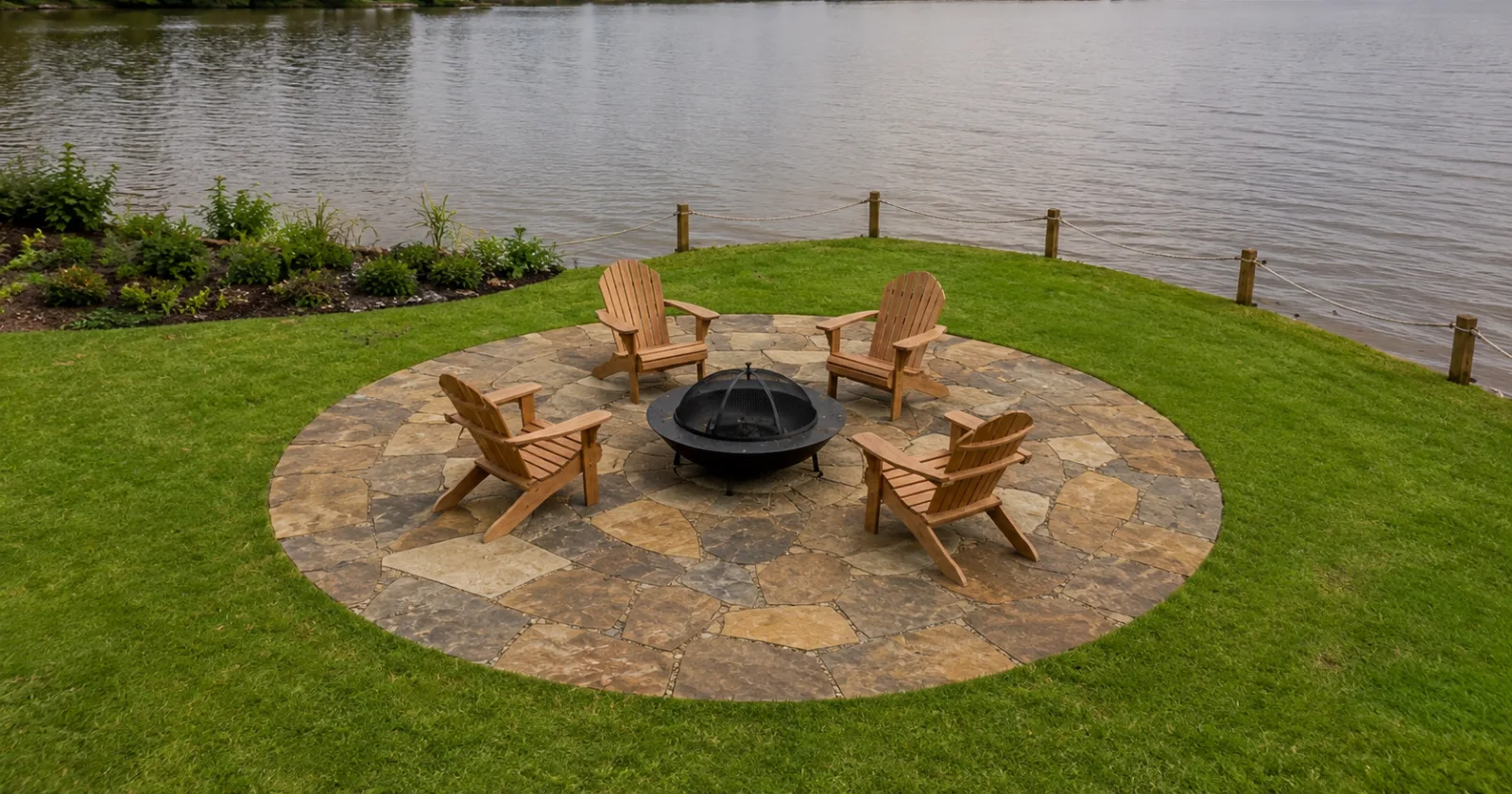
A garden can be planted well and still feel unsettled. A terrace can be well-built and still look wrong. In most cases, the ground is the reason.
The stone underfoot sets the tone of a place before the walls are built, before the planting is established, before a chair is placed. It is the first material a space is judged by and, in most settings, the most permanent.
Scale, colour, surface and edge decide whether a garden feels new, settled, formal, quiet or strong.
Large-format flags read differently to smaller sets. A pale stone in a north-facing courtyard holds light differently to the same stone in full sun. Dark millstone grit on a Lancashire terrace belongs to the landscape in a way that imported limestone rarely does.
These are not aesthetic preferences. They are the conditions a stone has to be judged against before it is selected — conditions that cannot be assessed from a sample board.
The decisions made at ground level determine everything that follows. Paths pull a garden together or fragment it. A threshold stone announces the character of a house before the door is opened. A courtyard either settles or it does not.
When the ground is right, the place tends to be right. When the ground is wrong, no amount of planting or furniture corrects it.
This is why the ground is where selection begins.