The range.
An edited range of natural stone. Browse freely, or refine by palette, surface or application.
Each piece is seen in person before it carries the Assheton name. Use the filters to find what fits, or begin with what catches your eye.
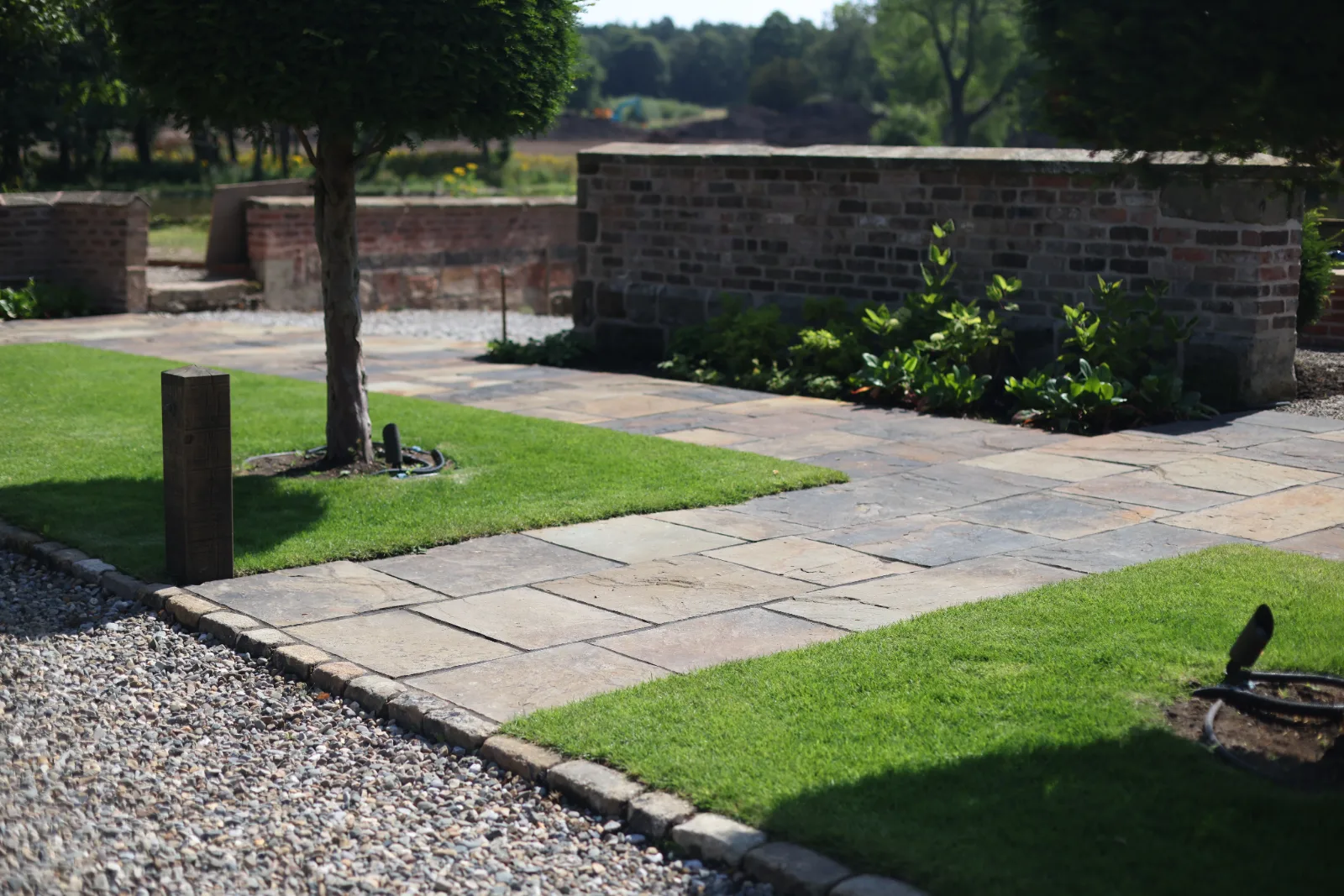
No. 01 - Haslingden Noir
Haslingden Noir begins in the flag beds of the Haslingden hills. It is a northern sandstone with a darker register than most buff grounds, moving through ferruginous buff, umber, smoke grey and near-black mineral markings. The tone is not applied or forced. It belongs to the bed itself: the result of pressure, water, iron and time. Riven by hand, the surface keeps the quiet irregularity of the stone. It is not polished flat or made overly clean. Each flag holds the trace of its own making, with natural movement, weathered variation and a close-grained weight underfoot. Selected by Assheton for its depth, restraint and character, Haslingden Noir is a ground material with presence. Dark without being severe. Weathered without feeling tired. A sandstone made for courtyards, paths and approaches that should feel settled from the day they are laid. Buff to noir, riven by hand, Haslingden Noir carries the weight of weather, iron and water through a dark northern ground.
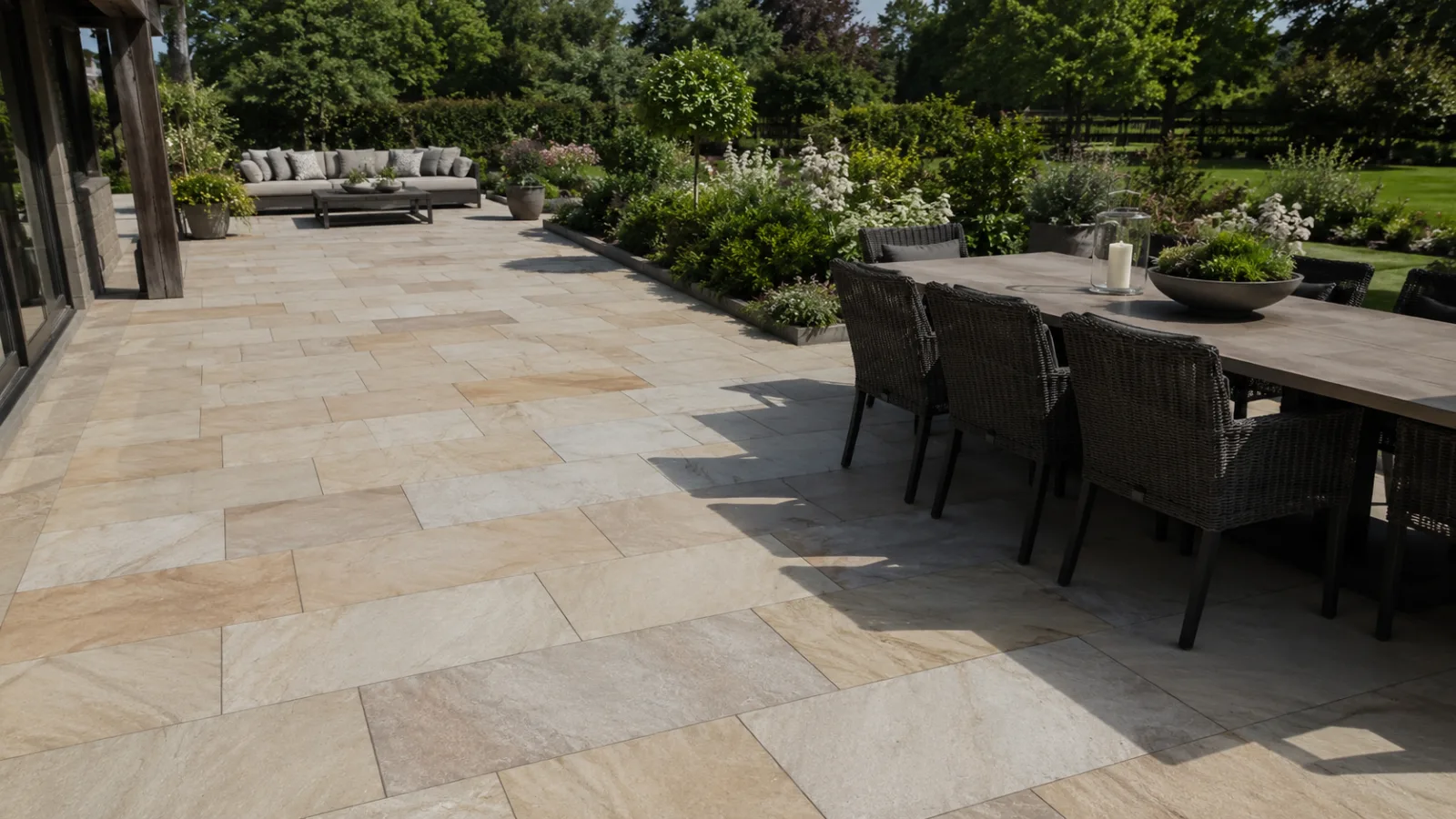
No. 04 — Fallow Sandstone
Fallow Sandstone is drawn from Fletcher Bank, above Ramsbottom. It is a northern millstone grit, coarse in grain and quietly varied in colour. The stone moves through fallow buff, pale umber and stone-washed mineral tones, with natural marbling held within the bed rather than placed upon the surface. Its warmth is restrained. Its movement is quiet, mineral and entirely its own. The name Fallow belongs to that character: dry, softened, weathered and naturally uneven in tone. It is not a flat buff sandstone. It carries depth, grain and occasional ferruginous markings, with the close texture of a stone formed for strength. Cut for ground, walling and worked elements, Fallow keeps the feeling of the bank it came from. It sits easily in gardens, terraces, paths, approaches and masonry where the stone should feel settled, honest and long-lived. A fallow northern ground, warm in body, cooled by mineral shadow and quiet marbling.
Long Gallery
Of quiet façades, and the patience of chapter houses.
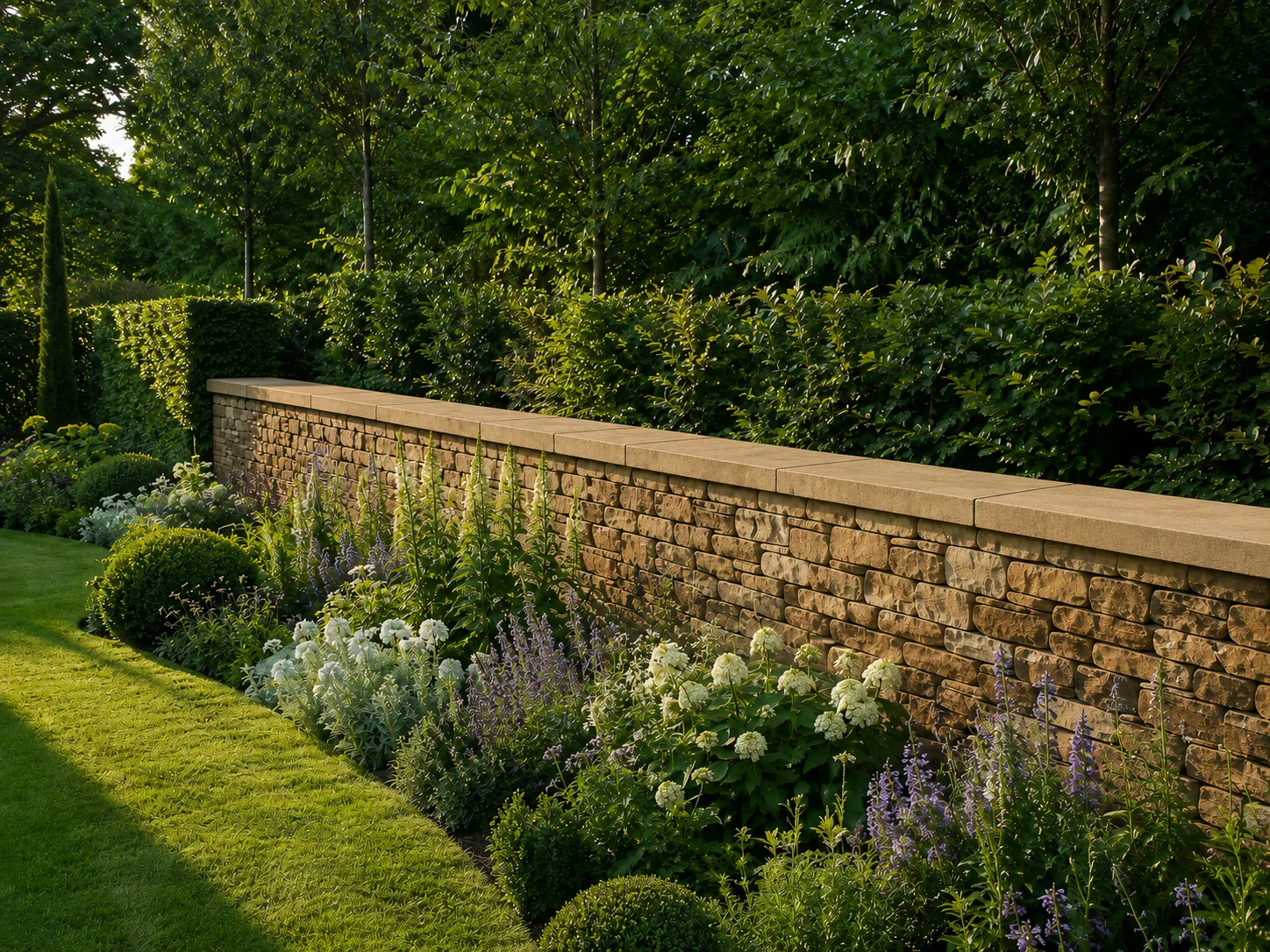
No.04 - Shire Oat walling
Oat and umber, laid in quiet strength.
Honey Hour
Of late afternoon, on a West Country wall.
Pale Holt
Of pale gold, and a garden wall in June.
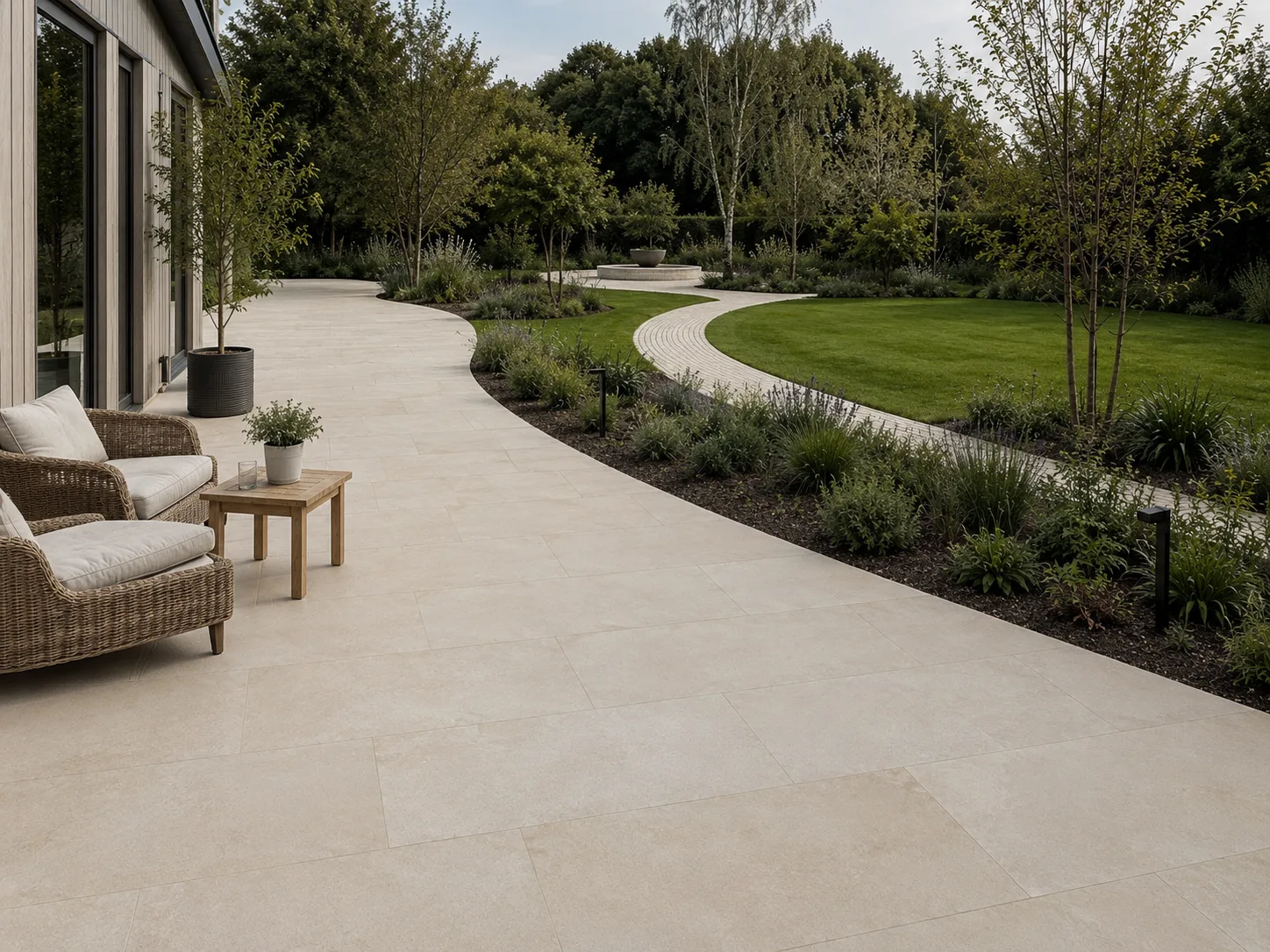
No.24 - Ecru Limestone
Of costal warmth, fossils and occasional veining beneath a beige-ivory surface.
Ink Still
Of still water, and the shadow beneath.
Dove
Of cool underfoot, and the patience of the north.
Moor
Of Pennine light, held flat.
Quiet
Of a polished pond, held indoors.
Covert
Of a winter fell, and the quiet green of its shadow.
Courtyard Pale
Of a Burgundy courtyard, held in winter light.
Scarp Oat
Of a quiet French face, patient as any at home.
Carr
Of deep water, kept indoors.
Weald
Of a path worn by three centuries of feet.
Holt
Of an older wall, taken down and kept.
Old Threshold
Of a doorway a family crossed for four generations.
Made for the setting
Of a stone cut properly for the place it belongs to.
Know what the stone needs to do? The range is also organised by where it lives: Ground, Wall, Edge, Found, Bespoke.
Browse by application