Choosing stone by atmosphere, not colour
Colour is the first thing noticed and the least reliable guide. Atmosphere — the weight, tone and surface behaviour of a stone across different light — is what holds a place together.
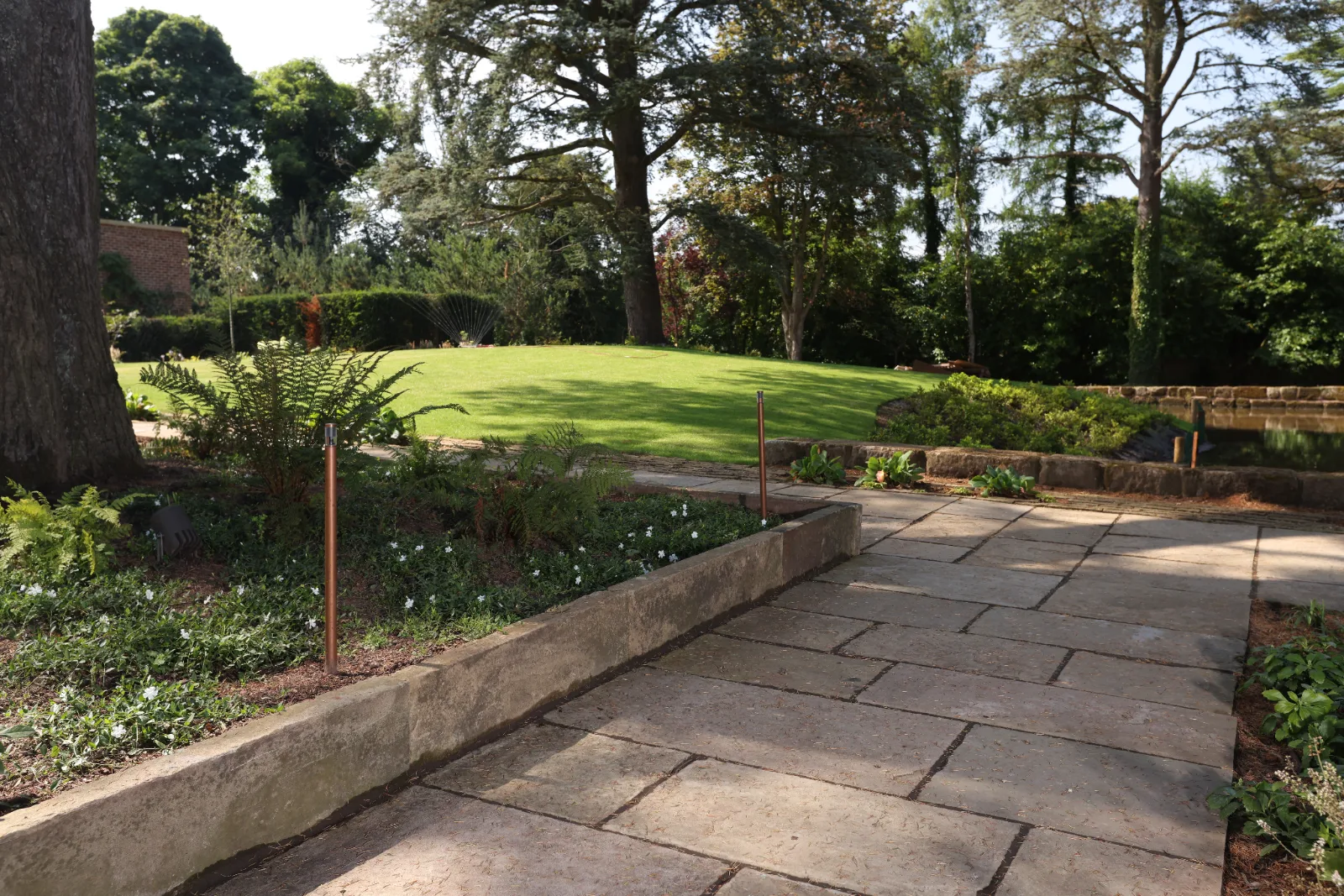
Colour is a distraction. It is the quality most clients lead with and the one that ages least well as a basis for selection. Stone changes colour with light, moisture, weathering and age. A pale stone selected in October may look white in August. A dark stone selected in sunshine may feel oppressive in a north-facing yard.
The more reliable guide is atmosphere. Atmosphere is the quality of a stone across different conditions — how it holds light, how it reads at distance, how it changes with rain, how it settles after two winters.
The question is not: what colour is this stone? The question is: what does this stone do to the place around it?
Some stones calm a setting. Some enlarge it. Some add weight and gravity. Some feel temporary regardless of their age. These qualities are not dependent on colour alone. They come from surface texture, mineral density, variation pattern, edge character and the way the stone sits in its bed.
When Assheton selects a material, the first assessment is atmospheric — what the stone does to the space around it, and whether that quality is consistent enough to carry across a whole project.
A stone that is beautiful in a single slab can be wrong when laid across a whole courtyard. The atmosphere it creates at scale is what matters. Colour, by that point, is secondary.