The importance of the edge
Steps, copings, thresholds and wall heads are where quality is revealed. The edge is what a place is judged by, close up and in passing.
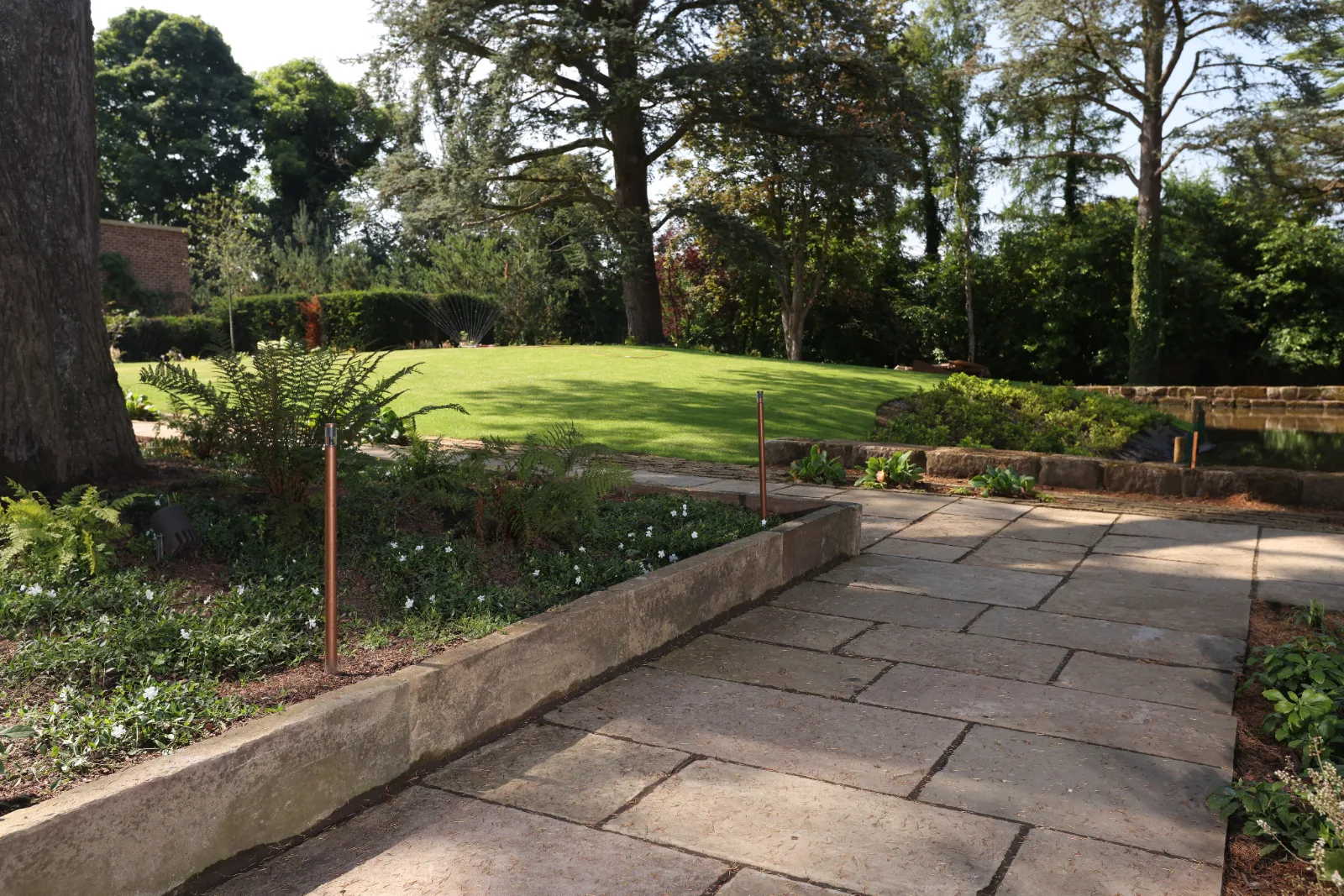
There is a reading of a place that happens from a distance and a reading that happens close up. From a distance, tone and scale do the work. Close up, the edge takes over.
An edge is a coping on a wall, the nosing of a step, the threshold stone at a door, the cap on a pier. These are the pieces that receive the most attention and the most wear. They are also the pieces most often treated as afterthoughts.
A coping that is too thin changes the proportion of a wall. A step nosing that is too sharp reads as industrial. A threshold stone that does not match the flags inside the house breaks the threshold at the most important point.
The edge requires a different set of judgements to the field stone. Thickness matters more here — a thin coping looks unconvincing on a substantial wall. The arris matters — whether a corner is left sharp, eased or moulded changes the character of the piece entirely. The relationship between the edge stone and the material it meets has to be resolved in advance.
Assheton — Edge exists because the detail stone cannot be selected as an afterthought, added to an order as a matching line item. The best threshold stones are selected for that role. The best copings are chosen for the particular wall they will finish.
When the edge is right, it confirms the quality of everything it meets. When it is wrong, no amount of attention to the field material recovers it.