Why family-owned quarries matter
The stone that has been worked by the same family for generations carries a different kind of knowledge. Consistency, judgement and the understanding of a bed are not things that scale easily.

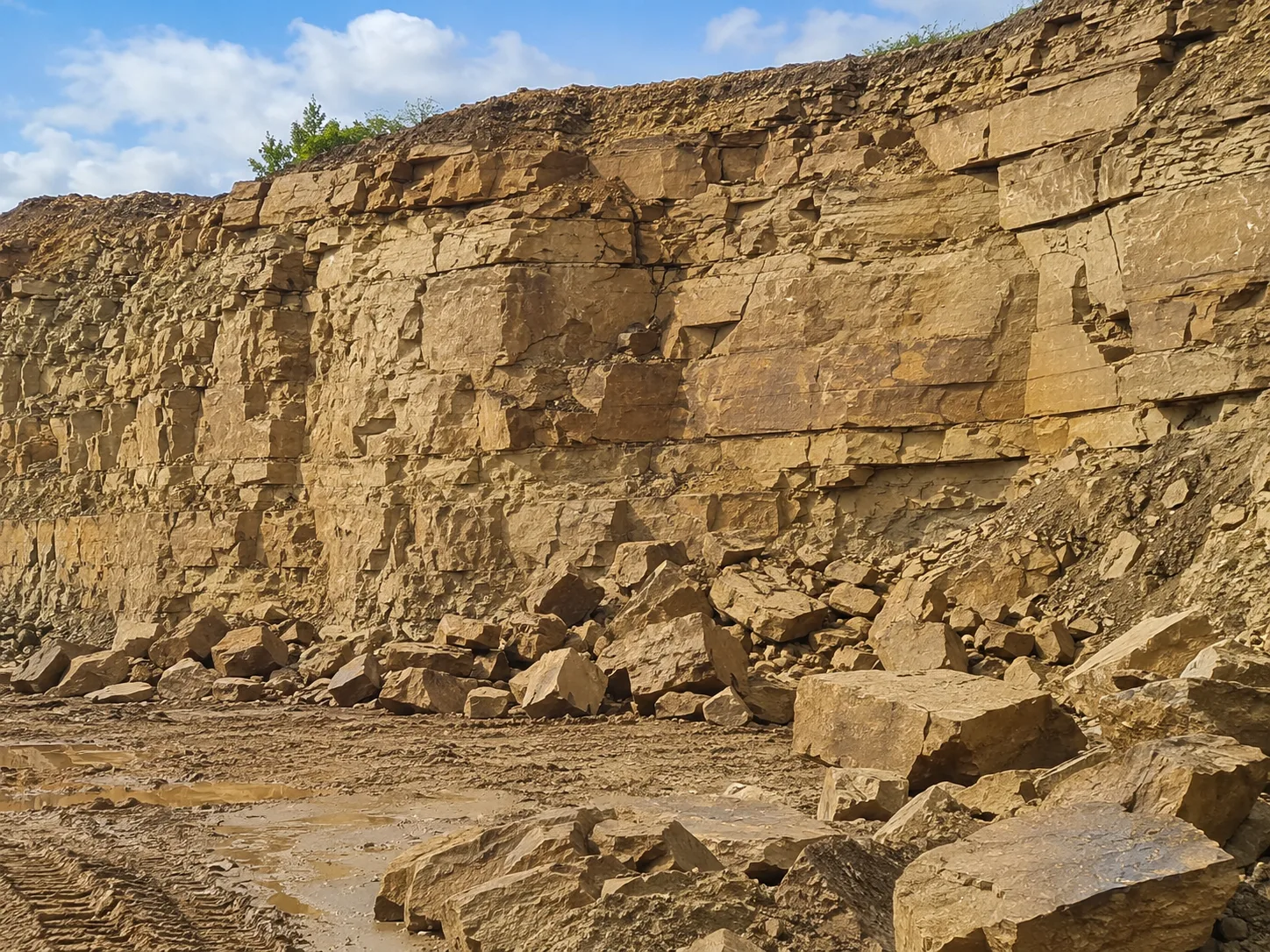
The quarry industry, like many industries, has consolidated. Many quarries that were family-owned are now part of larger groups. The stone may not have changed. The knowledge has.
Family ownership does not guarantee quality. But it creates conditions in which a particular kind of knowledge can accumulate — the knowledge of a specific seam, worked by people who know what that seam looked like before them and what it is likely to do in the next decade.
That knowledge shapes the way a quarry is worked. It shapes which blocks are kept and which are rejected. It shapes what the quarryman will tell you about the material before you ask.
Assheton works with a select group of family-owned quarries and specialist producers. Most have been in the same hands for generations. Some are in the British Isles. Some are on the continent. All of them work in a way that only makes sense if you are intending to be there for a long time.
The range carried by Assheton is small. One reason is that the number of quarries that meet this criterion is small. Selection at source depends on source quality. That is why the group of quarries is deliberately limited.
Many hundreds of quarries produce stone. Very few of them produce stone of the kind of consistency and character that earns a place in a project designed to last. The family quarry, worked with that intention, is often where that stone comes from.