Reclaimed stone and the danger of false age
Age that has been manufactured is always visible eventually. Reclaimed stone is chosen for the right reasons — surface, wear, character — or it is not chosen.

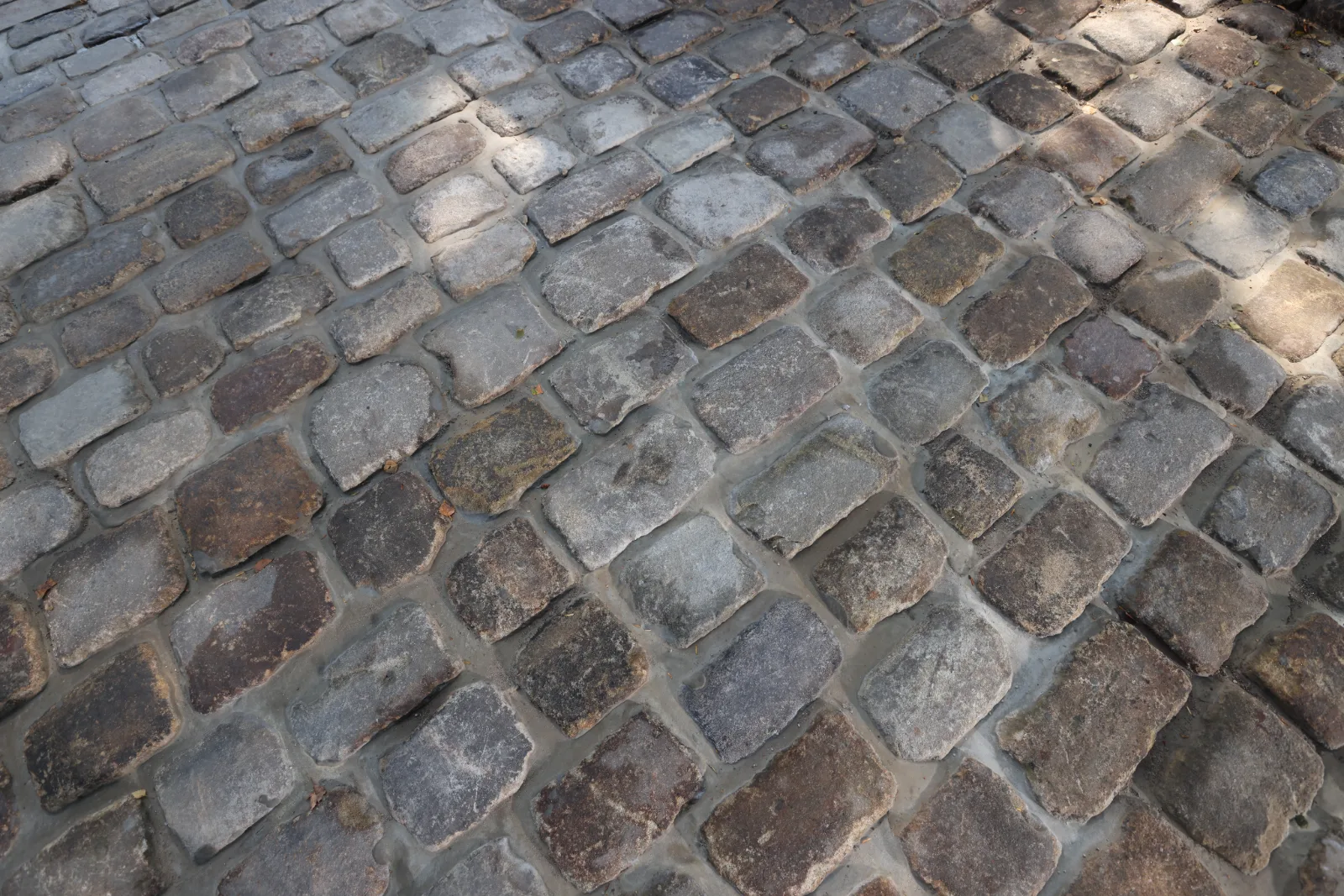
There is a category of reclaimed stone that is not reclaimed at all. It is new stone that has been tumbled, acid-washed, shot-blasted or otherwise processed to produce the appearance of age. It is identifiable on inspection, and it is not what Assheton carries.
Genuine reclaimed stone carries age in ways that cannot be manufactured. The softened arris that comes from two centuries of footfall cannot be reproduced on a machine. The surface patina that develops over decades in a particular landscape is specific to that landscape. The variation in colour that comes from being part of a real place is not the same as variation introduced artificially.
False age is always visible. Not always immediately — but always eventually. The material has not earned its surface, and the surface knows it.
The question asked of every reclaimed piece in Assheton — Found is whether the age is real. Whether the wear makes sense. Whether the surface has been earned by the stone's actual history, not constructed to suggest one.
Found pieces are limited by nature. The supply of genuinely worn Yorkshire sets, of aged limestone flags from demolished estates, of hand-dressed sandstone from a building that no longer exists, is finite. That is part of their value.
When a Found piece carries the Assheton name, it means the age is real, the wear is honest and the character has been verified in person. There is no other way to carry this material correctly.