Dark stone in garden landscapes
Dark stone does not suit every setting. When it does, it anchors a place in a way that lighter materials cannot. The ground sets the tone before the planting is established.
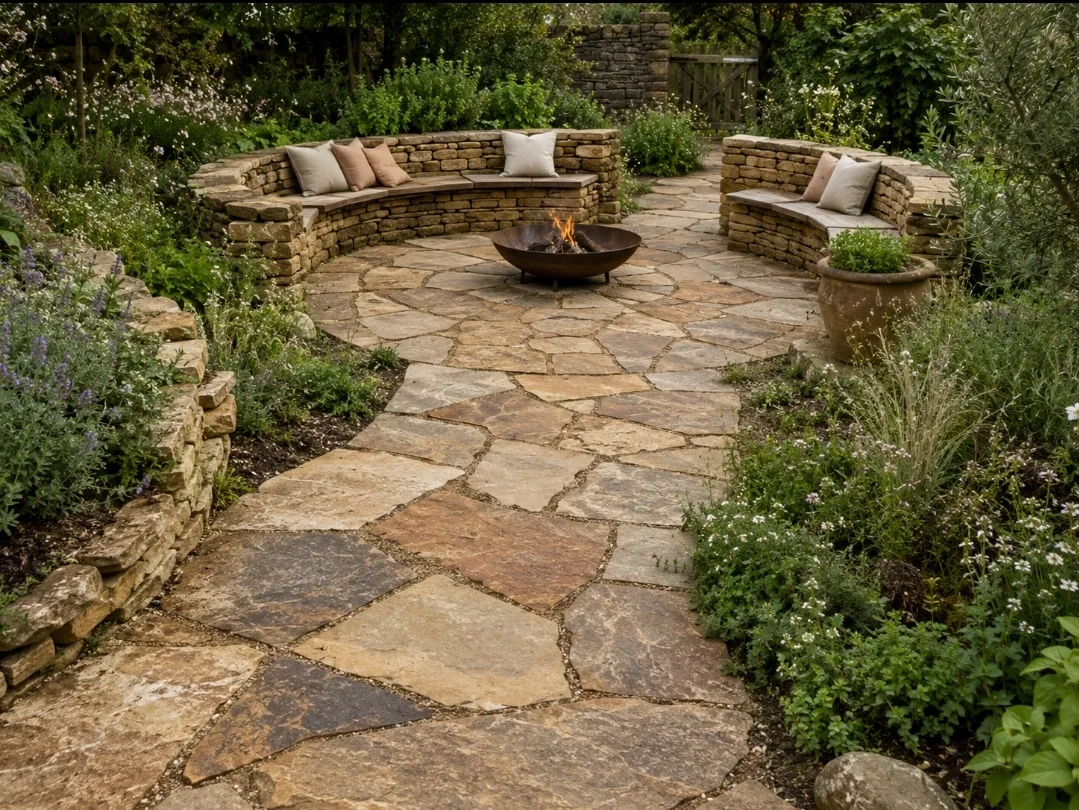
The default in English garden design has been pale stone — limestone, sandstone in buff and cream, materials that read as warm and legible in low northern light. There are good reasons for this. But dark stone, in the right setting, does something pale stone cannot.
Dark millstone grit, black limestone, dark engineering brick — when these materials are laid correctly, they anchor a space. They create a ground that feels permanent, that holds the planting above it rather than competing with it, that reads as part of the landscape rather than placed inside it.
Dark stone does not lighten with age. That is its strength. The tone it has on the day it is laid is broadly the tone it will have in thirty years.
The danger with dark stone is the setting. A dark courtyard that receives little direct light can feel heavy. A dark terrace against a pale rendered house can fight the building rather than settle beneath it. The selection question is whether the darkness serves the place — whether the mineral weight of the material adds gravity or simply mass.
Haslingdon Millstone Flags are a case in point. Dark, mineral and still. Against a stone house on the Lancashire fells, they are the correct material. In a Surrey garden designed around pale limestone walls, they would be wrong.
The material is not the answer to every question. It is the answer to the question that particular place is asking.