The quiet value of thickness
Thin stone looks thin. The difference between a flag that has weight and one that does not is felt underfoot, seen in the edge and understood over time.
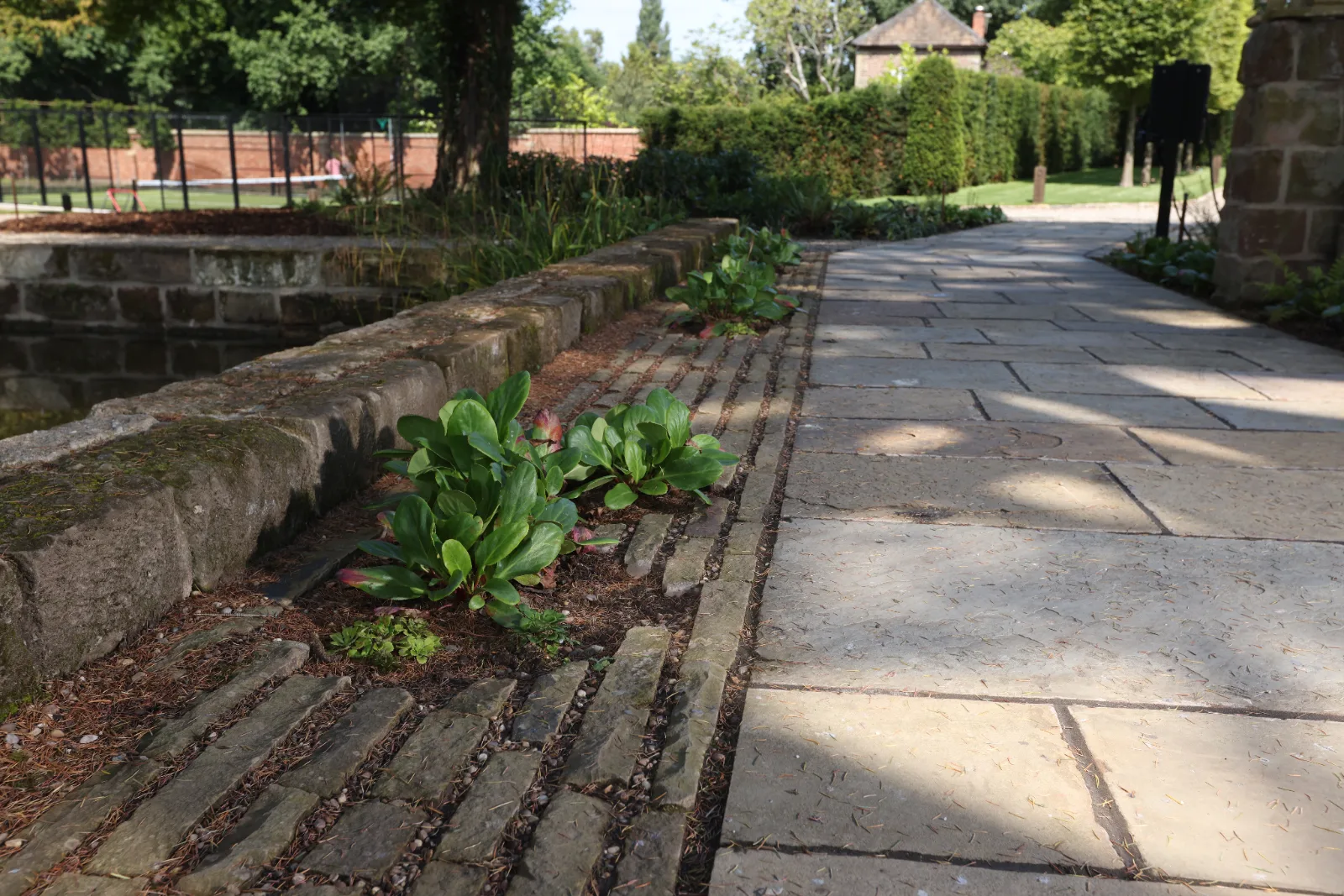
There is a specification decision made early in many projects that shapes every subsequent impression of the stone. Thickness.
The difference between 40mm and 65mm paving is not visible from above. It is visible at the edge. At the threshold. In the step. Wherever the cross-section is revealed, thin stone announces itself. Not dramatically — subtly. But permanently.
A flag that is correctly thick feels like the ground. A flag that is too thin feels like a surface applied to the ground. The distinction is not always conscious, but it is always felt.
Thickness contributes to the acoustic quality of stone underfoot. Heavy flags do not move when walked on. They do not flex. They do not crack at the bed joint in the same way thinner material can. Permanence in stone is partly a function of specification, and specification includes thickness.
The stones carried by Assheton are specified with thickness in mind. Where a material has a natural bed that produces reliable material at 65mm or above, that is the standard it is held to. Where the seam produces thinner material consistently, that is noted and the material is specified for settings where that thickness is appropriate.
Thickness is not the most visible quality. It is one of the most honest ones.